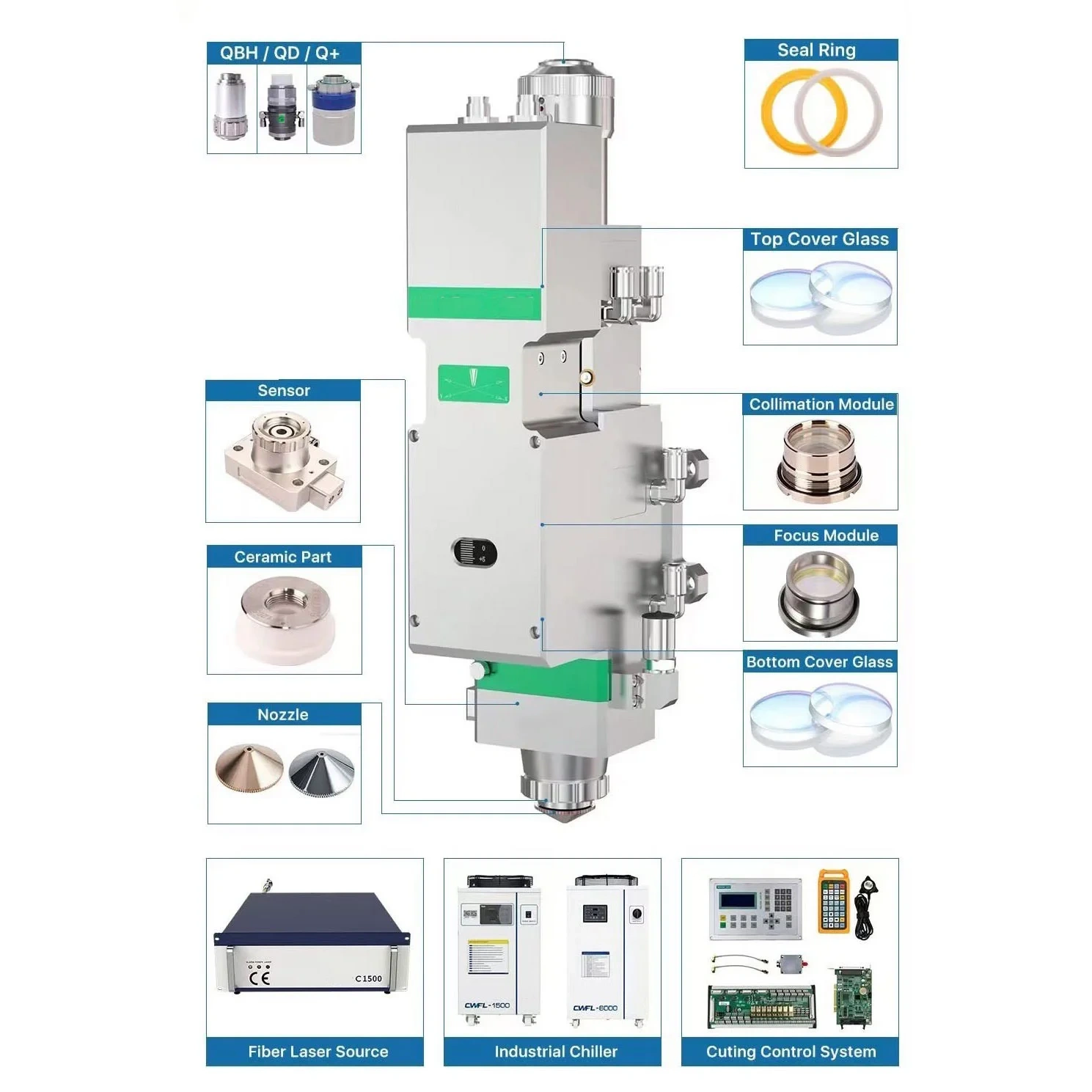

If you are specifying a 6kw fiber laser cutting machine for sheet metal work, the PW4020 pairs that power with a 2050 × 4000 mm dual-table working area and ±0.05 mm X/Y positioning accuracy. As a fully enclosed fiber laser cutting machine, it keeps dust, noise and particulate inside the cover while two interchangeable tables let loading and cutting run in parallel. This guide maps the cutting envelope, the throughput logic, the real limits of the enclosure and the configuration choices, so you can judge whether 6kW fits your part mix before you send a drawing for review.
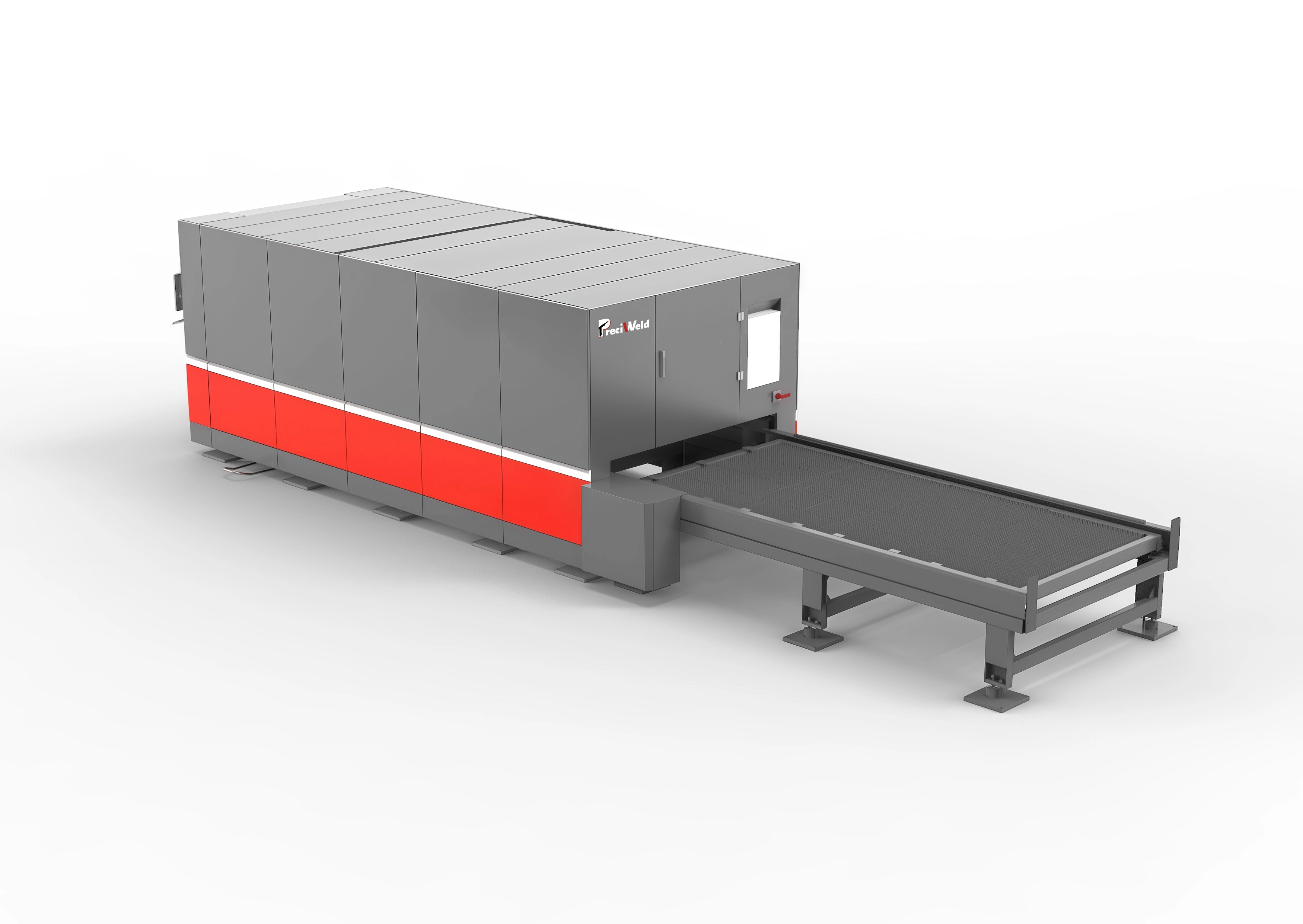
These are the maximum cut thicknesses published for the PW4020 at 6,000 W. Treat them as the outer edge of the envelope, not as a promise that every one of those thicknesses cuts at production speed.
| Material | Max thickness at 6kW | Assist gas | What it means in production |
|---|---|---|---|
| Mild steel / carbon steel | ≤ 25 mm | O₂ | Thin to mid gauge is the everyday working range. Expect slow travel, a wider heat-affected zone and more edge taper at the top of the range. |
| Stainless steel 304 | ≤ 20 mm | N₂ | Nitrogen gives a clean, oxide-free edge on thin and mid sections. above roughly the mid range, gas pressure and speed change noticeably. |
| Aluminum | ≤ 16 mm | N₂ | Workable across the range, but finish expectations vary by alloy. before you quote a visible or anodized part. |
| Brass | ≤ 14 mm | N₂ | The narrowest envelope of the four materials. and plan nitrogen consumption into the job cost. |
On a single-table machine, the laser sits idle while the finished sheet comes off and the next one goes on. The PW4020 carries two interchangeable working tables so that loading happens while the beam is still cutting.
Table A is inside the enclosure cutting the current nest while the operator works on the outside.
The next sheet is aligned and clamped on Table B during the same cut window.
The tables exchange position. Only the swap time stays on the critical path.
The beam resumes on the pre-loaded sheet while Table A is unloaded outside.
Effective cycle = cut time + swap time — with a shuttle table, load time no longer sits inside that sum.
Illustrative example only, not a machine rating: if a nest runs 3 minutes of arc time and the next sheet takes 2 minutes to load, a single-table machine spends roughly 5 minutes per sheet while a dual-table machine spends about 3 minutes plus the swap. Your real gain depends on how close your load time is to your cut time.
The fully enclosed cover is a containment measure applied at the machine. It reduces what leaves the cutting zone, but it does not take the place of plant-level extraction design, personal protective equipment or operator training.
The PW4020 is built from named subsystems. Each choice below is presented as a decision, not as a component list, so you can match the build to the work you actually run.
China Raycus CE version resonator at 6kW. The same platform is offered from 3kW to 20kW, so power is a sizing decision rather than a fixed frame.
Decide by: your heaviest routine thickness, not your occasional maximum.Raytools, BOCI or PRECITEC heads are offered. Head choice influences consumable supply, lens service and the thickness range you can hold quality on.
Decide by: consumable availability in your region and the thickness you run most.CYPCUT control with the CYPCUT BCS100 V3.0 height-follow system, running on a Yankong industrial computer.
Decide by: how quickly your programmers can move existing nests onto CYPCUT.Japan Fuji 1.3kW servo motors, Japan Shimpo reducers, Taiwan HIWIN rails and Taiwan YYC helical rack.
Decide by: service reach — these are widely supported wear items.Gantry design with a seamless welded lathe bed, whole-machine quenching and a cast aluminum crossbeam for rigidity and vibration resistance.
Decide by: whether you cut thin gauge at speed, where vibration shows up as edge ripple.Water cooling with a Hanli / S&A chiller, French Schneider electrical components, SMC / AirTAC pneumatics, a Japan SMC proportional valve and gas control.
Decide by: ambient temperature stability and the power quality at your wall.Find the line that looks like your shop. Each row connects a real buying situation to a published PW4020 fact and the decision that follows from it.
| Your situation | What it demands | PW4020 fact to match | Decision |
|---|---|---|---|
| Mixed job shop, 1–10 mm carbon and stainless | One machine that covers most of the order book without special setup | 6kW with ≤25 mm carbon (O₂) and ≤20 mm stainless (N₂) | Fits. Standardise nesting on the common gauges and quote thick work separately. |
| Cabinet and chassis fabrication with high sheet turnover | Laser stays cutting while the next blank is loaded | Two interchangeable tables, 2050 × 4000 mm, 1.5G acceleration | Fits. Plan the load/swap routine around your nest times to capture the gain. |
| Structural work quoting 20–25 mm plate | Repeatable thick-section output, not a one-off severing cut | 25 mm carbon is the 6kW severing limit | Sample-cut first. If thick plate is routine, size up the power range rather than accept slow cuts. |
| Elevator panels and kitchen equipment in stainless | Clean, oxide-free edges on visible faces | Nitrogen cutting to 20 mm stainless | Fits below the thick range. Lock the edge standard with a sample and budget nitrogen. |
| Automotive or electronics parts plant running long shifts | Stable output, planned maintenance, line integration | Water cooling, named servo/rail/rack brands, automation line integration, factory direct OEM service | Fits. Request a drawing review with cycle targets and line interface details. |
| Tight floor with limited incoming power | Footprint and electrical capacity known before the order | 11600 × 4150 × 2020 mm, 10.5 T, 380V / 50Hz / 100A | Verify slab, route and power drop before signing — this is the most common late-stage blocker. |
Thickness limits describe cutting capability at 6,000 W. They are not production-speed ratings and should always be confirmed against a cut sample in your own material grade.
The PW4020 is specified for sheet metal fabricators, automotive component producers and structural steel manufacturers, with named industry use across chassis cabinets, elevator decoration, kitchen equipment, lighting, automotive, aerospace, electronics and construction.
The fastest way to confirm whether 6kW at 2050 × 4000 mm is right for you is a review against your own parts, not a spec sheet comparison. Send the drawing and the material, and ask for a sample cut in the thickness where you are least certain.
Keep adjacent product options together for a faster catalog comparison.
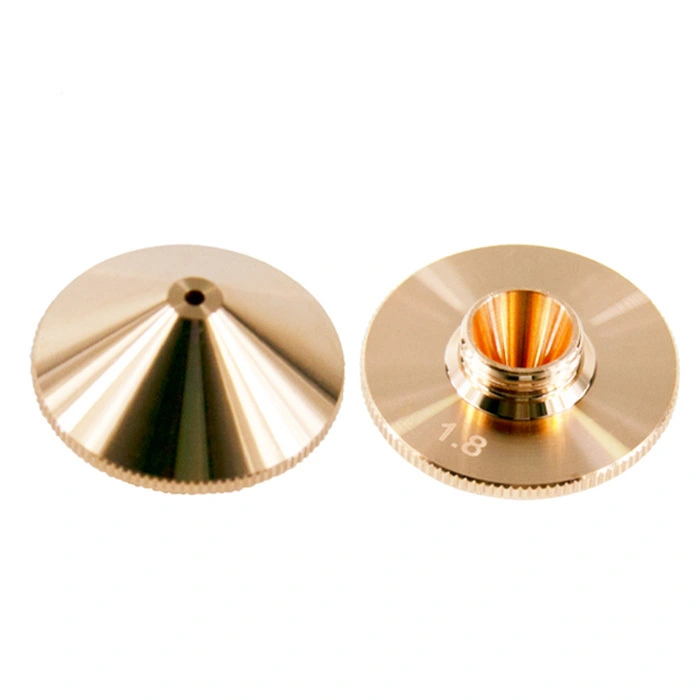
A laser nozzle is a precision component that directs assist gas and focuses the laser beam onto the material surface for cutting, welding, or engraving. It protects the lens from spatter, controls…
View product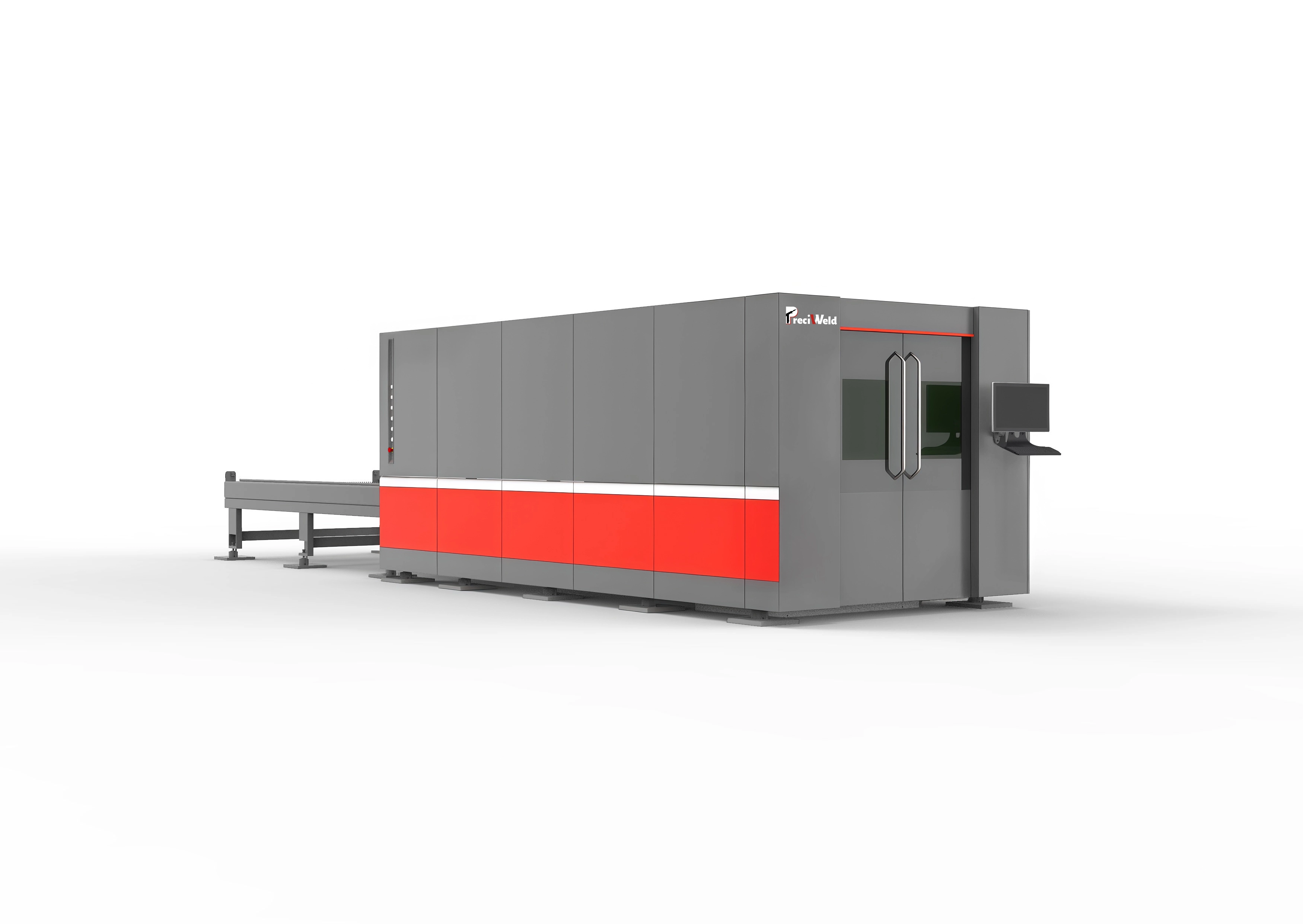
Manufacturer of fiber laser cutting machine offering 2550x8200mm size and factory direct service for metal sheet fabrication.
View productthe capability table lists a maximum of 25 mm on mild steel with oxygen, 20 mm on stainless steel 304 with nitrogen, 16 mm on aluminum and 14 mm on brass. those are ceiling figures, not everyday production rates.
a 2050 by 4000 mm dual-table working area. the two tables let one sheet load while the other is cutting, which is why the machine is positioned for sheet metal work rather than small-part batches.
oxygen on mild steel and carbon steel, nitrogen on stainless steel 304, aluminum and brass. the table treats the gas choice as part of the material row, so a quote that omits it is incomplete.
expect slower travel, a wider heat-affected zone and more edge taper. the table flags this on the mild steel row and the same effect applies when stainless or aluminum is pushed toward its limit.
material grade, thickness, tolerance and the finish expectation on the visible edge. aluminum in particular varies by alloy, so the finish should be agreed before a cosmetic or anodized part is quoted.
start from the thickest routine job, not the thickest possible cut. if most work sits below roughly half the maximum thickness, the machine cuts comfortably; if the top of the range is routine, edge quality becomes the deciding cost.